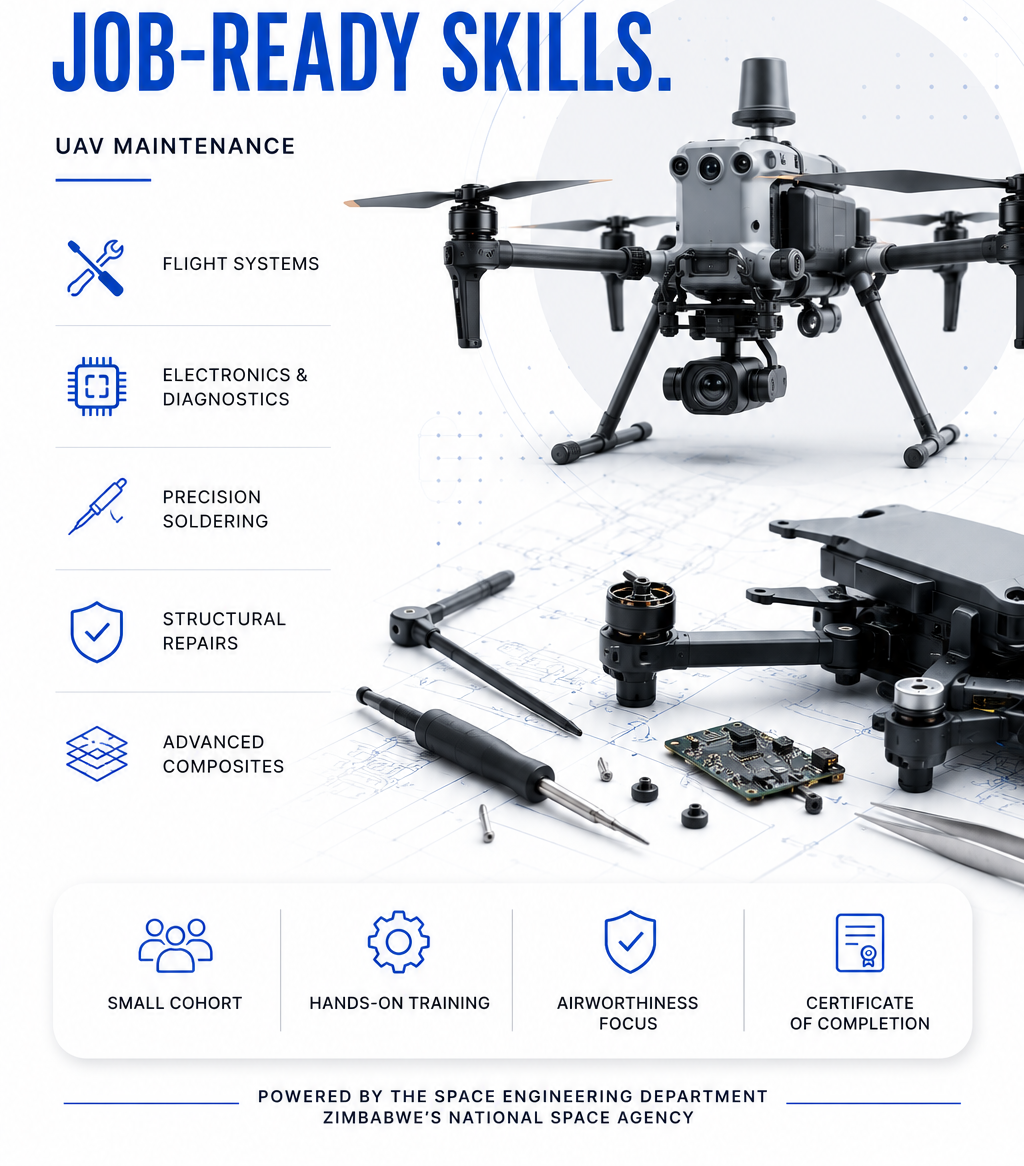
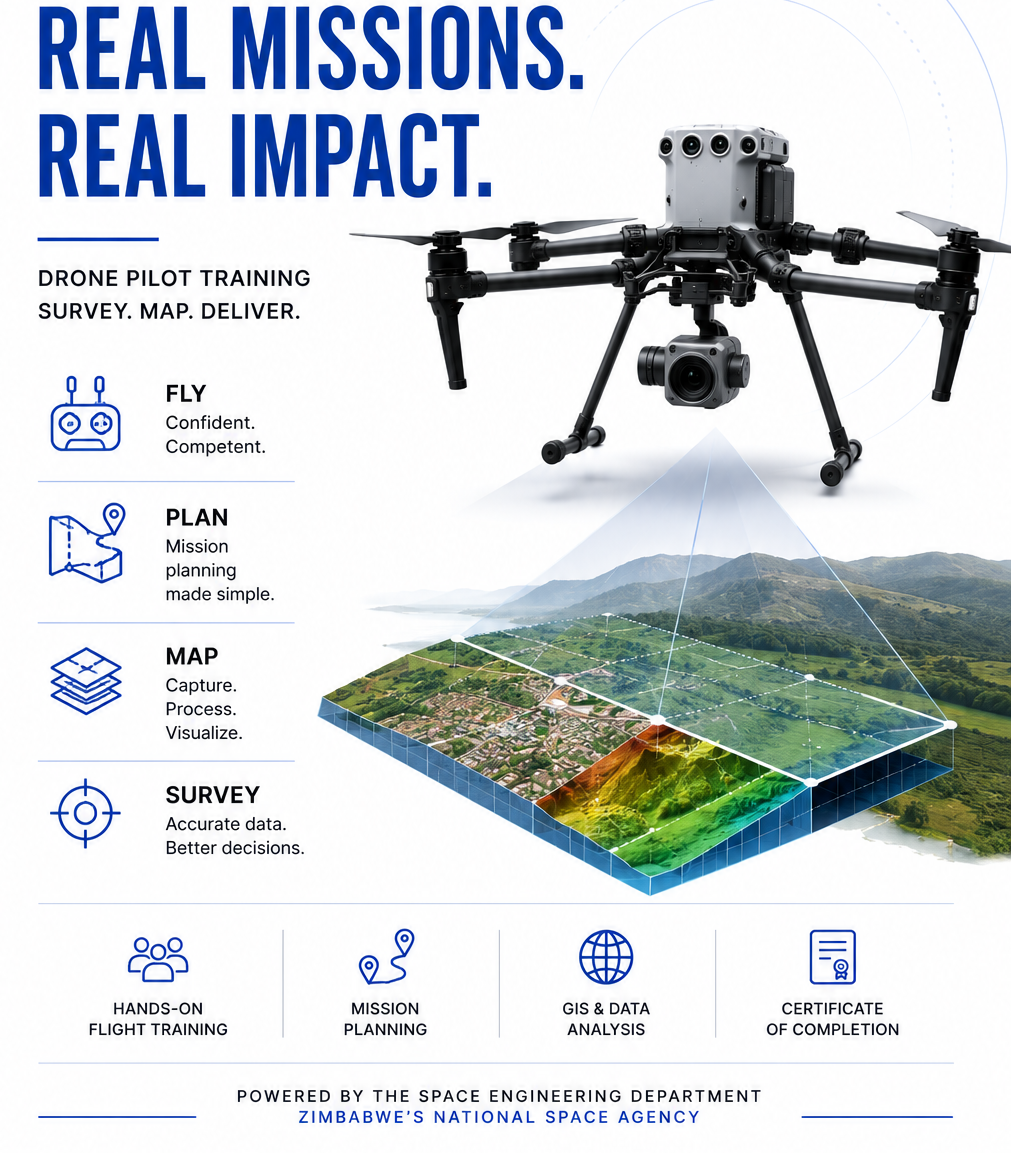
Two weeks. Real drones. Job-ready UAV maintenance skills.
Inspect, maintain, and certify professional-grade UAVs — flight systems, electronics, soldering, structural repairs, and composites. Full course details are now available.
Careers
Join Zimbabwe’s space and geospatial journey when opportunities open — and grow through ZINGSA’s courses in Space Engineering, GIS, drone operations, and advanced manufacturing.
Vacancies
There are currently no internship or employment vacancies available at ZINGSA. When new opportunities are advertised, they will be published on this page.
For general recruitment enquiries, email recruitment@zingsa.ac.zw. Please note that unsolicited applications for closed vacancies may not receive a response.
ZINGSA is an equal opportunity employer and encourages applications from all eligible candidates when vacancies are advertised.
Career paths
When vacancies open, they sit within one of ZINGSA’s five divisions — spanning engineering, Earth observation, mission operations, research, and administration.
Aeronautical, mechanical, electrical, and systems engineers designing and building satellites, UAVs, and ground systems.
Explore this division →Remote sensing specialists, GIS analysts, and cartographers turning satellite imagery into national insight.
Explore this division →Mission control, ground station, and satellite command & control specialists at the Mazowe Satellite Center.
Explore this division →Researchers studying the ionosphere, space weather, and GNSS — advancing Zimbabwe’s space science base.
Explore this division →Growth & training
ZINGSA invests in the people who carry its mandate forward — through courses in Space Engineering and GIS, from drone training and CNC machining to CubeSat development and international programmes.
Human capital development
ZINGSA invests in people as powerfully as it invests in satellites and sensors. Structured courses in Space Engineering and GIS — including drone training, CNC machining, 3D printing, and CubeSat development — grow the engineers, analysts, and pilots who carry the national mission forward.
Two weeks. Real drones. Job-ready UAV maintenance skills.
Inspect, maintain, and certify professional-grade UAVs — flight systems, electronics, soldering, structural repairs, and composites. Full course details are now available.
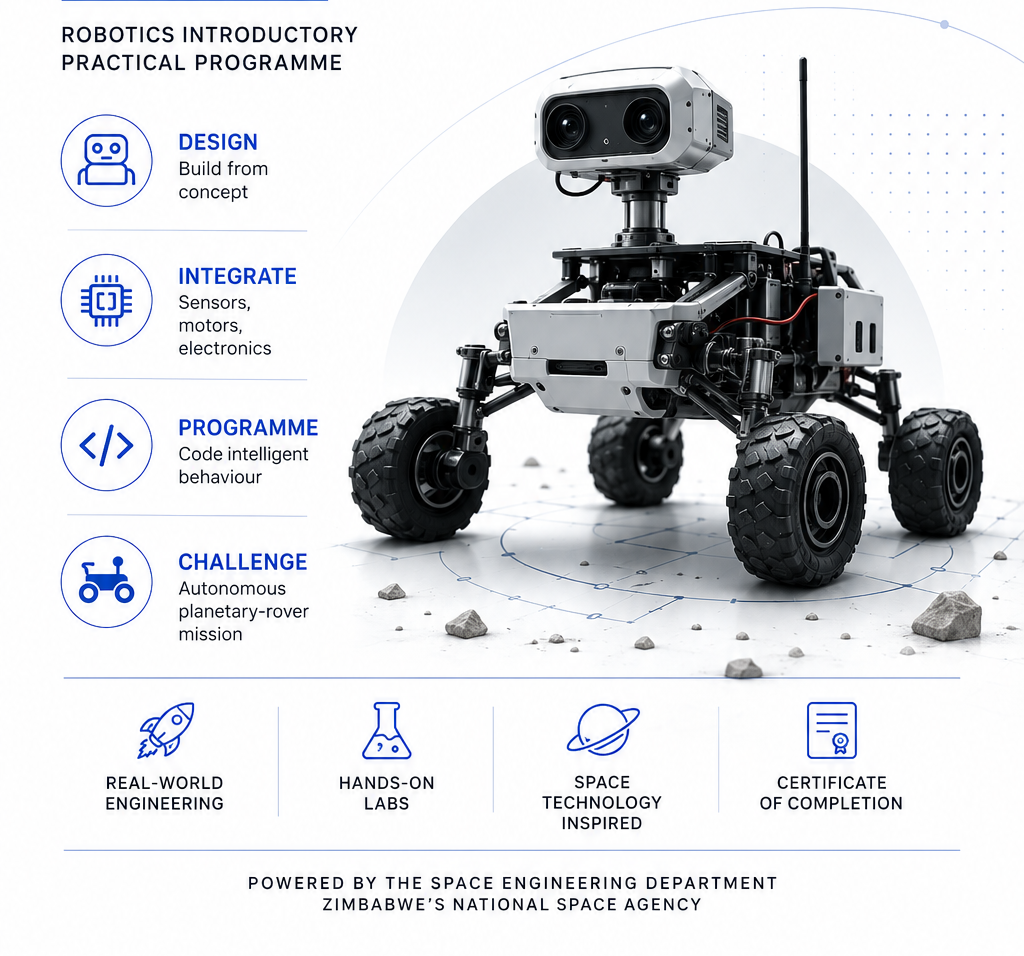
Three weeks. Real robots. Practical autonomy.
Design, wire and programme a mobile robot and complete an autonomous planetary-rover challenge. Full course details and enrolment information are now available.
Two weeks. Real machines. Job-ready CNC skills.
Hands-on CNC milling in Harare — Fusion 360 CAD/CAM, 4-axis VMC, and precision inspection. Full course details and enrolment information are now available.
Hands-on programmes that take learners from satellite fundamentals to flight-ready hardware.
Training that connects Earth observation data to decisions on the ground.

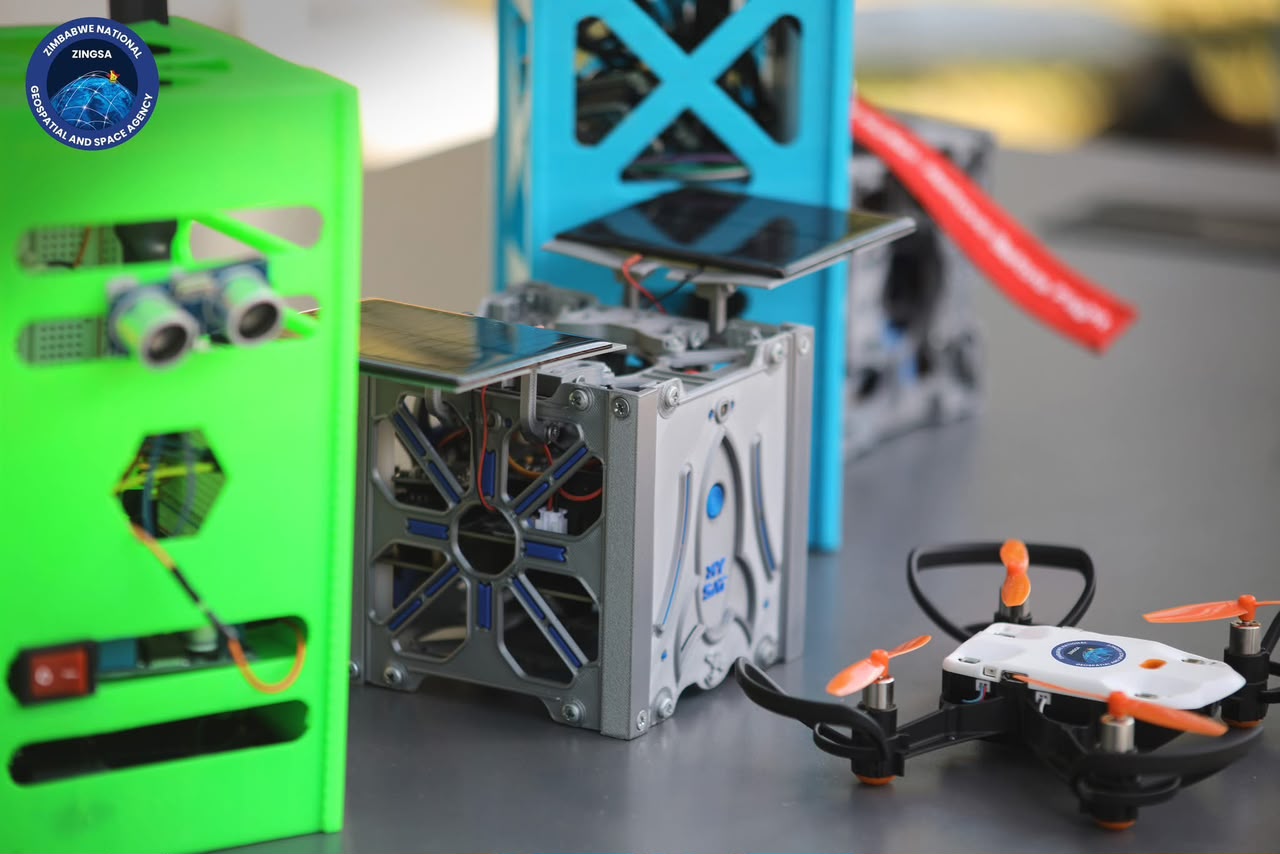
Design, assemble, and test small satellites using modern engineering and 3D-printed components.

Certified UAV operations — flight planning, GPS-guided spraying, and precision field work.

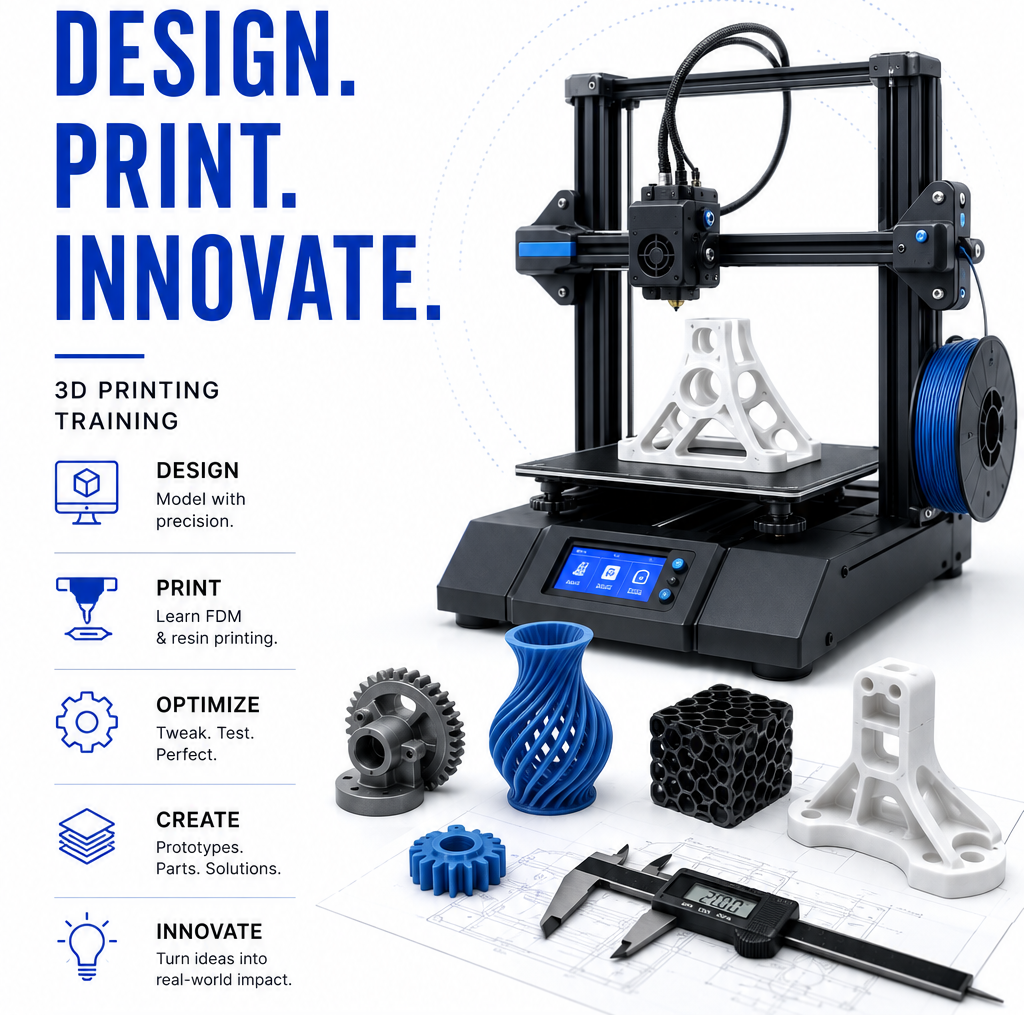
Rapid prototyping and additive manufacturing for satellite parts and engineering models.

2-week intensive: flight systems, diagnostics, repairs, and airworthiness certification readiness.

3-week practical: mobile robots, sensors, motors, and a planetary-rover challenge.

2-week intensive: CAD/CAM, 4-axis VMC, CNC lathe — job-ready precision machining skills.

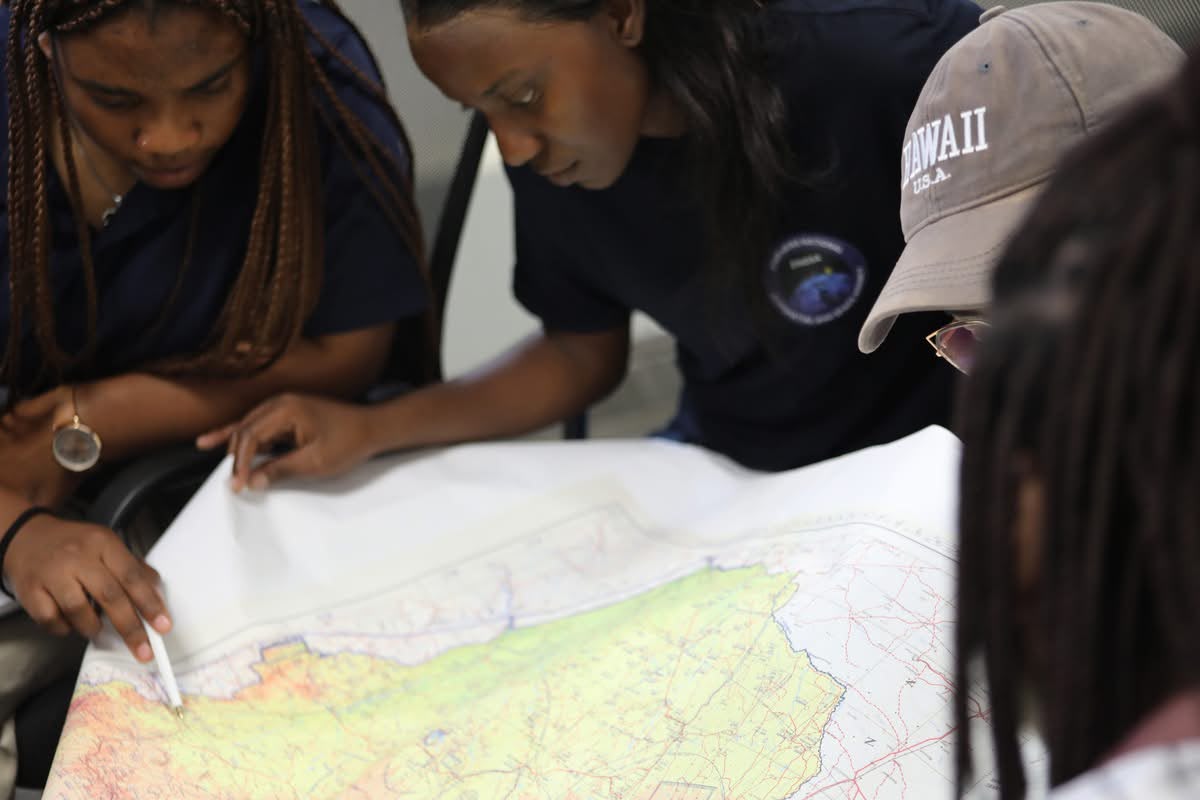
Spatial analysis, cartography, and Earth observation skills for national planning.

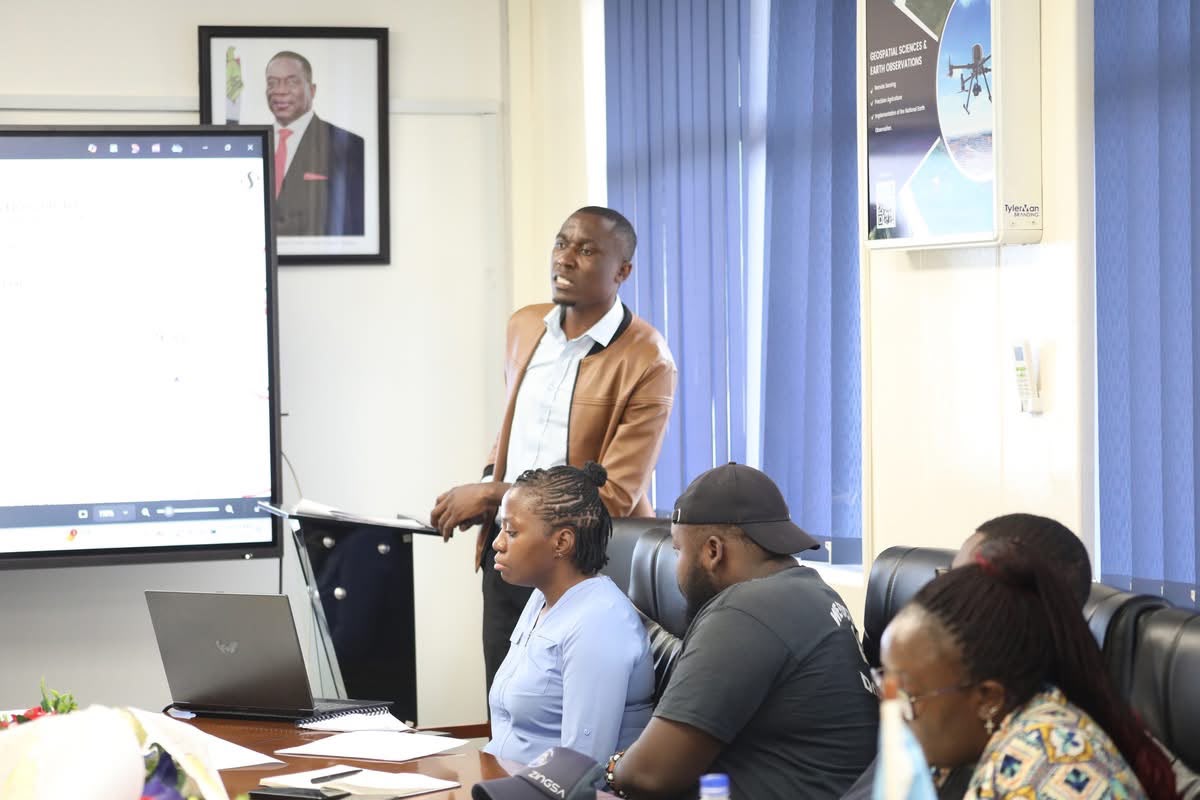
Structured sessions across engineering, geospatial science, and mission operations.
International training
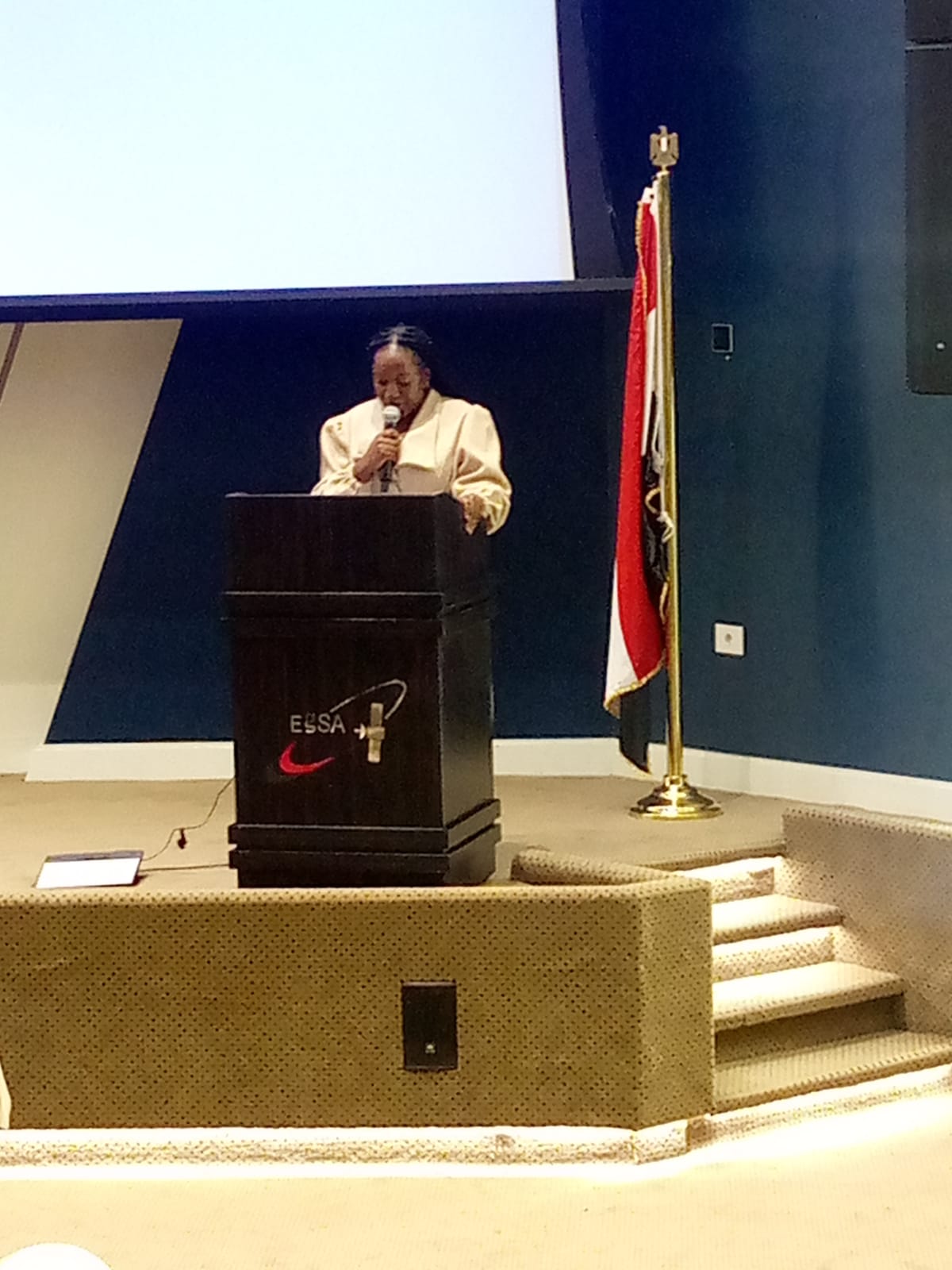
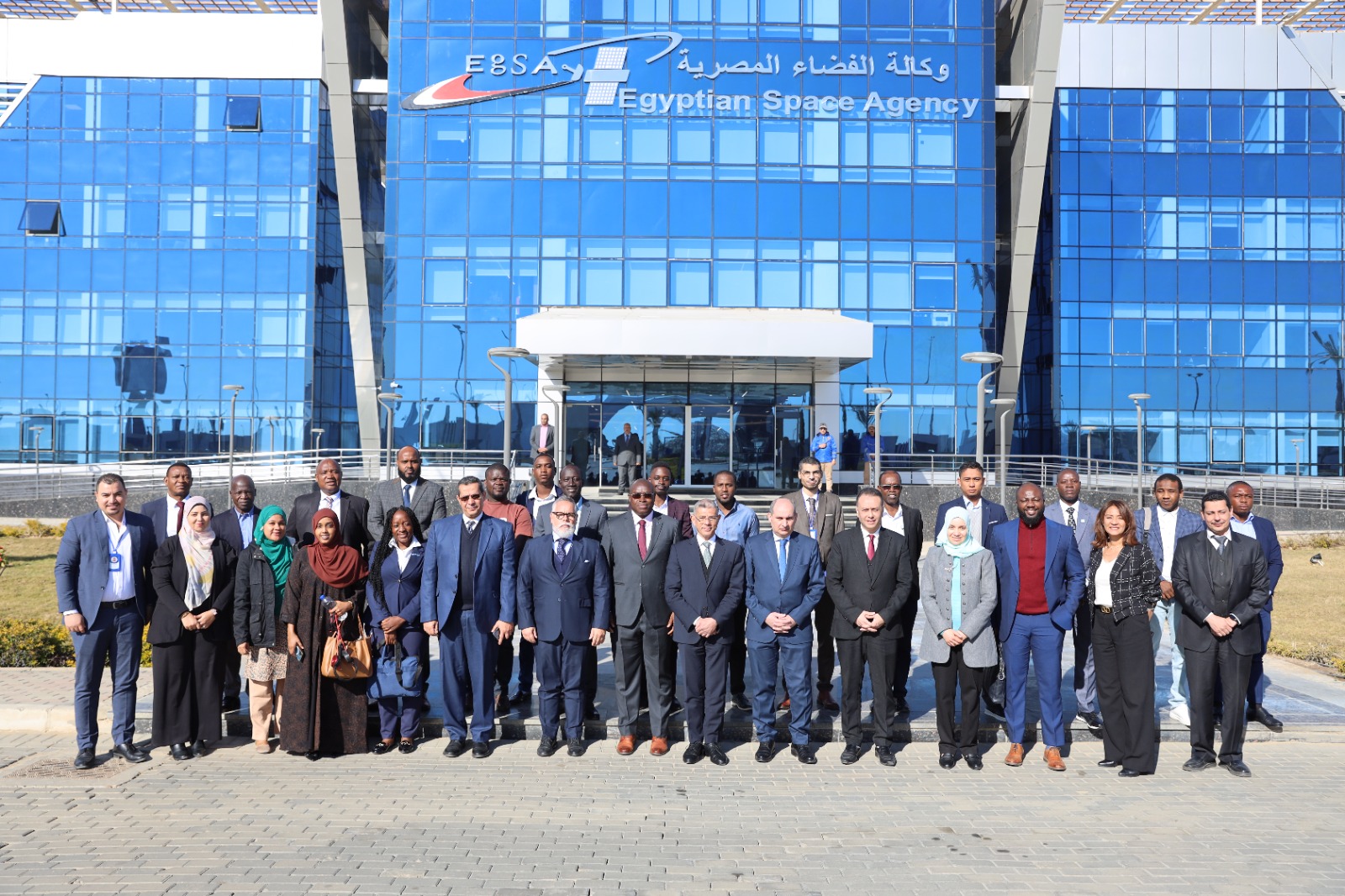
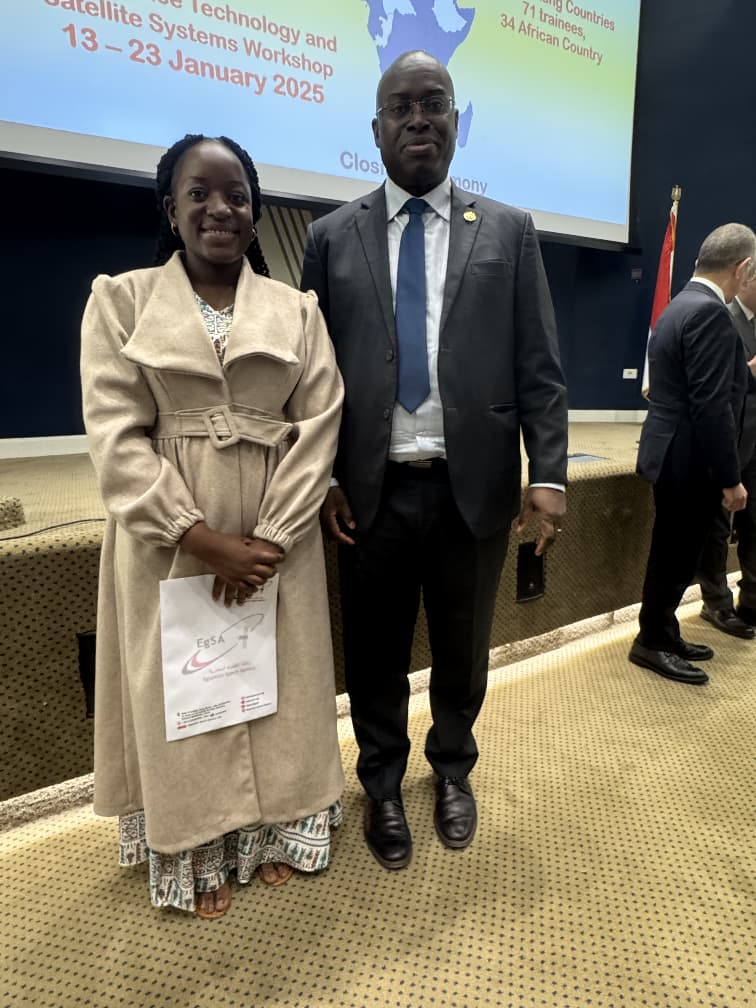
Ms Patience Muchini of the Space Engineering Department attended the Introduction to Satellite Systems and Applications Course hosted by the Egyptian Space Agency. The programme covered orbital mechanics, satellite subsystems, ground segment operations, and applications in remote sensing and Earth observation.
Her strong grasp of the material and active participation set her apart among the delegates — she was selected to deliver a speech on behalf of all participants. In her address, she reflected on the course experience, spoke to ZINGSA’s growing space programmes and Zimbabwe’s broader space ambitions, and highlighted how satellite systems connect to her own engineering work.
Why it matters
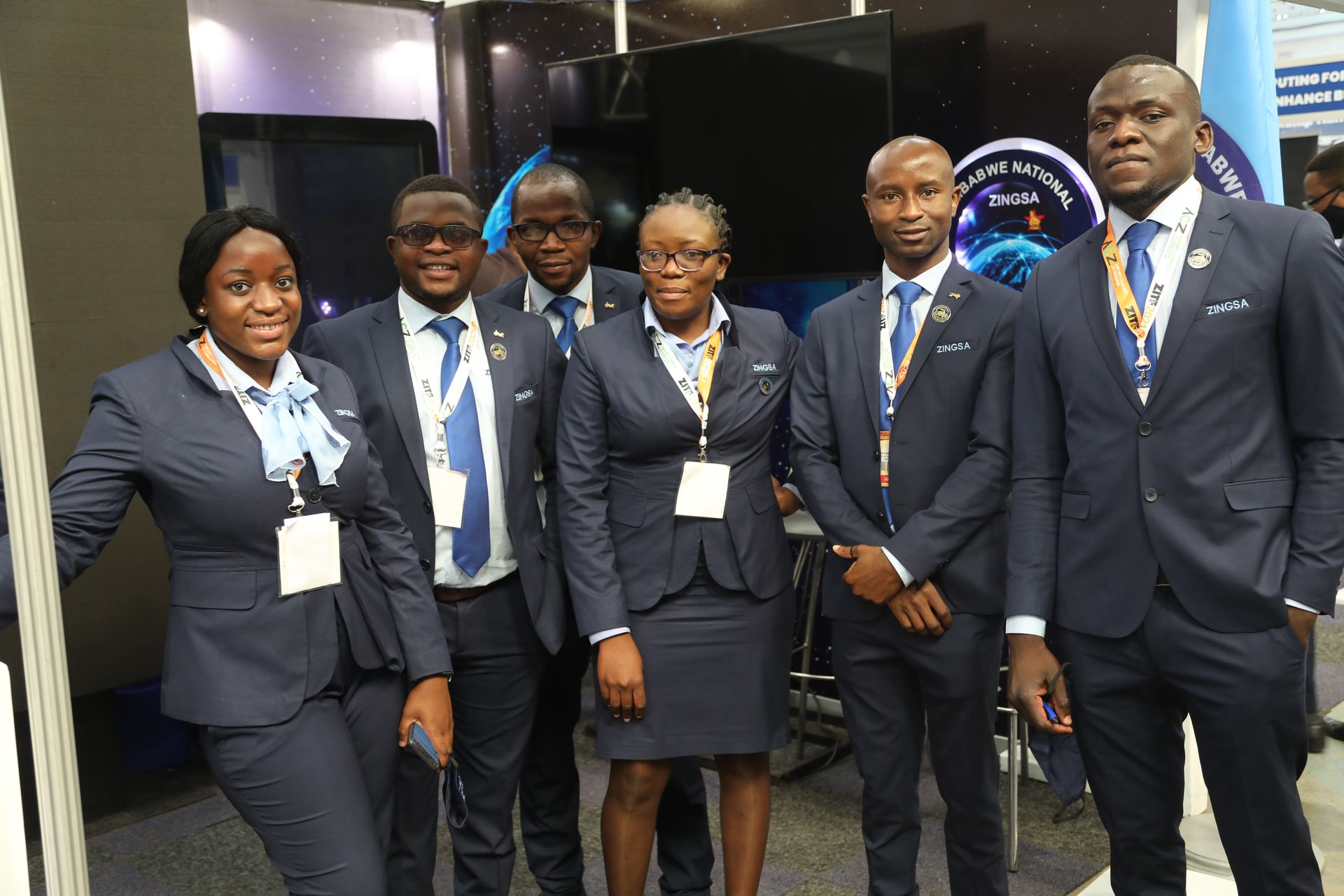
Human capital is national space power.Every satellite launched, every map produced, and every drone flown depends on skilled people. ZINGSA’s courses ensure Zimbabwe builds that capability at home — and on the international stage.