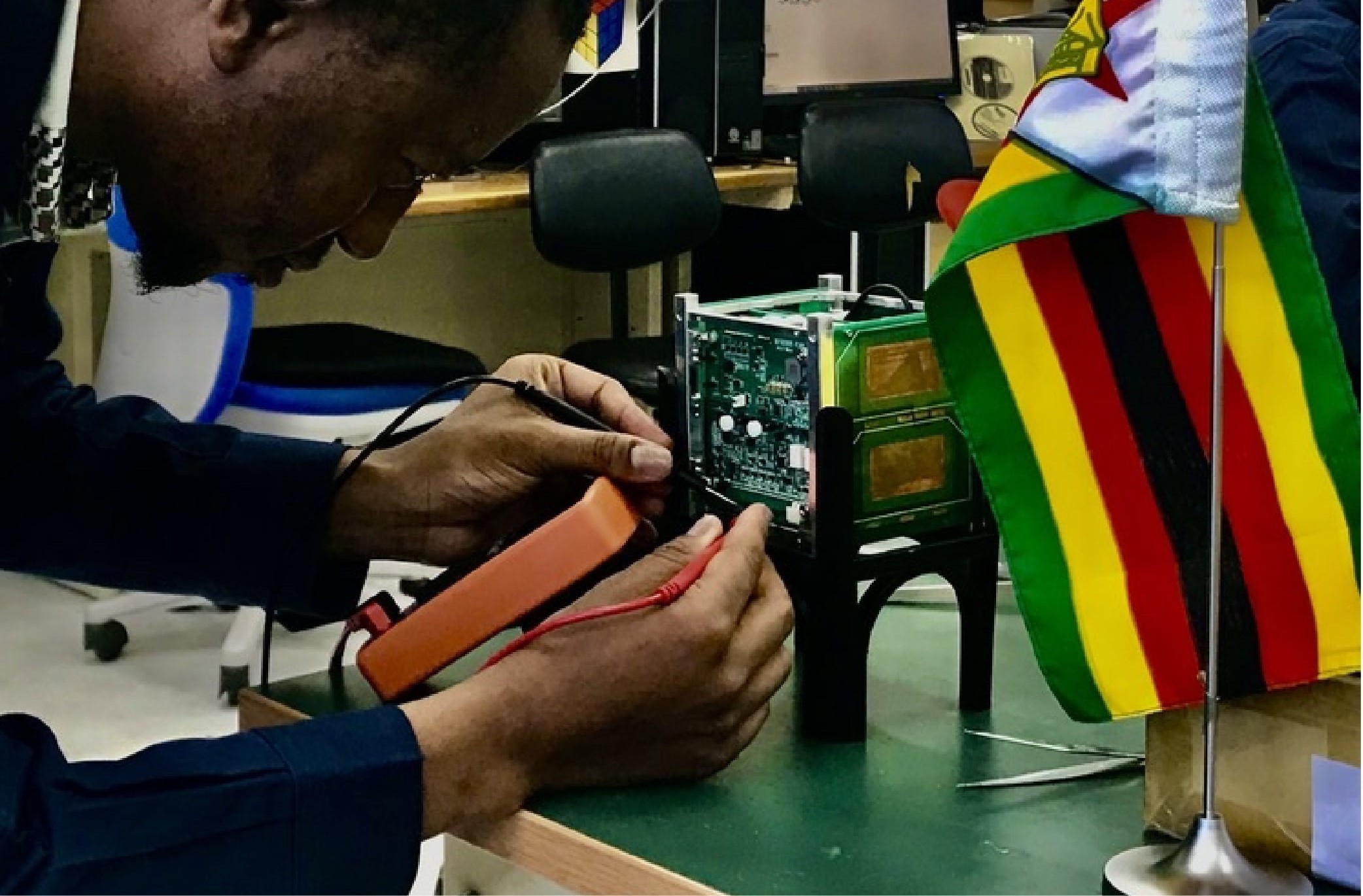

The field of Information and Communication Technology (ICT) is rapidly evolving, and its integration into space missions is revolutionizing the way we explore and understand the cosmos. The future of ICT and systems development in space missions promises increased efficiency, better communication, and more robust data management, paving the way for unprecedented advancements in space exploration.
Recent advancements in ICT have significantly enhanced the capabilities of space missions. The development of high-speed data transfer technologies, advanced satellite communication systems, and sophisticated onboard computing power has enabled more efficient and reliable operations in space.
High-speed data transfer technologies are critical for space missions, enabling rapid communication between spacecraft and ground stations. Innovations such as laser communication systems are set to replace traditional radio frequency systems, offering exponentially faster data transmission rates, which are essential for high-resolution imaging and real-time data analysis.
Satellite communication systems are the backbone of space missions. Advances in this area include the development of more resilient and adaptive communication protocols, which ensure continuous and stable connectivity, even in the harsh conditions of space. These systems support a wide range of functions, from telemetry and command to scientific data transmission.
The increase in onboard computing power is revolutionizing how spacecraft operate. Modern spacecraft are equipped with advanced processors and artificial intelligence (AI) systems that allow for autonomous decision-making, reducing the need for constant intervention from ground control. This autonomy is crucial for deep space missions, where communication delays can be significant.
Systems development in space missions is becoming more innovative, with a focus on modular and scalable designs, cybersecurity, and robust data management systems.
Modular and scalable systems are increasingly important in space missions. These designs allow for easy upgrades and maintenance, ensuring that spacecraft can adapt to new technologies and mission requirements without extensive overhauls. This flexibility is particularly beneficial for long-duration missions and missions involving multiple spacecraft.
As space missions become more complex and reliant on ICT, cybersecurity has become a critical concern. Protecting space assets from cyber threats is paramount to ensure the integrity and success of missions. Advances in encryption technologies, secure communication protocols, and real-time threat detection systems are essential components of modern space mission designs.
Effective data management systems are crucial for handling the vast amounts of data generated by space missions. Innovations in data storage, retrieval, and analysis technologies are enabling more efficient and accurate processing of scientific data. These systems support the rapid extraction of valuable insights, enhancing the overall mission outcomes.
The future of ICT and systems development in space missions is promising, with continuous advancements expected in areas such as quantum communication, AI, and machine learning, and the Internet of Things (IoT).
Quantum communication holds the potential to revolutionize space communications with its promise of virtually unbreakable encryption and instantaneous data transfer. This technology could overcome the limitations of current communication systems, providing more secure and faster data transmission for space missions.
The integration of AI and machine learning into space missions is expected to grow, enabling more sophisticated data analysis, predictive maintenance, and autonomous navigation systems. These technologies will enhance the efficiency and reliability of space missions, allowing for more complex and ambitious explorations.
The IoT is set to play a significant role in future space missions, connecting various spacecraft systems and components to create an integrated network. This connectivity will facilitate real-time monitoring and control, improving the overall operational efficiency and coordination of space missions.
The future of ICT and systems development in space missions is bright, with numerous advancements on the horizon that promise to transform how we explore space. As these technologies continue to evolve, they will enable more efficient, secure, and innovative space missions, driving humanity's quest to understand and explore the universe.
Your email address will not be published. Required fields are marked *